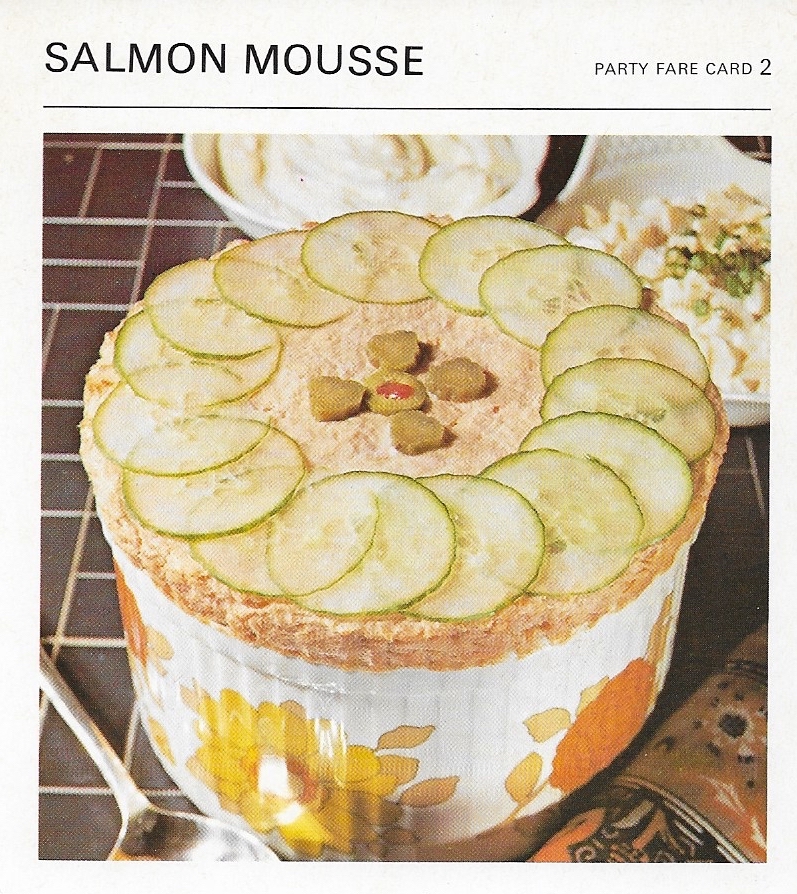
Tie a double band of wax paper around the outside of a 5 in. soufflé dish, grease lightly with margarine.
Make white sauce with 2 tablespoons margarine, flour, milk, and seasoning; add lemon juice.
Dissolve gelatin in hot water, add to sauce, allow to cool, covering with damp paper to prevent a skin forming.
Stir in flaked salmon, anchovy paste, and tomato purée – made by rubbing the tomatoes through a sieve.
Allow mixture to stiffen slightly, then fold in lightly whipped cream and the stiffly beaten egg whites.
Put into soufflé dish, allow to set, then carefully remove paper.
Garnish with small pieces of stuff olive, dill pickle and twists of cucumber.
TO SERVE: With mayonnaise well flavored with lemon juice with Potato salad: Mix cooked diced potato with mayonnaise and chopped scallions or grated onion, and garnish with chopped scallion tops.
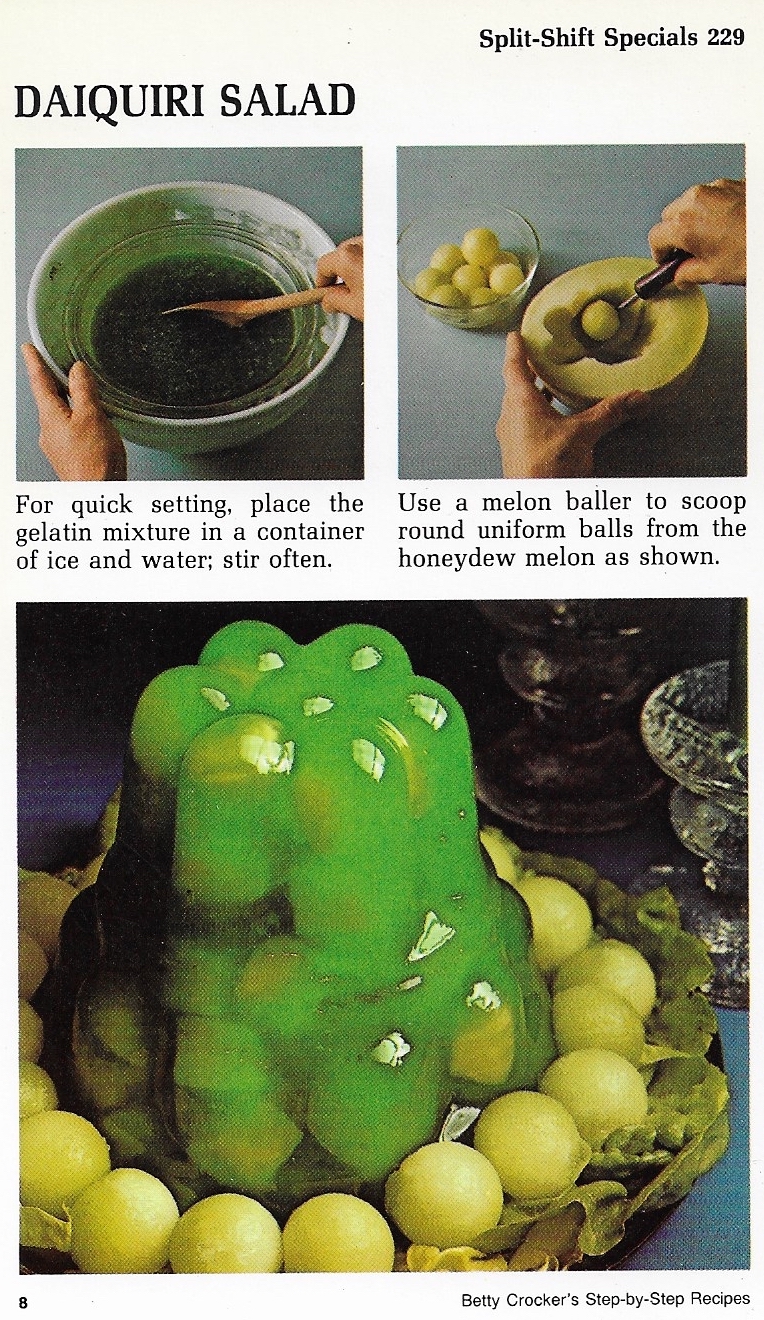
1 cup boiling water 1 package (6 ounces) lime-flavored gelatin 1 can (6 ounces) frozen limeade concentrate About ½ cup ginger ale 1 can (20 ounces) pineapple tidbits or chunks in juice, drained (reserve juice) ½ cup light rum Salad greens Honeydew melon balls
Pour boiling water on gelatin in 2-quart bowl; stir until gelatin is dissolved. Stir in frozen concentrate. Add enough ginger ale to reserved pineapple juice to measure 1¼ cups. Stir pineapple juice-ginger ale mixture and rum into gelatin mixture. Refrigerate until slightly thickened, about 1 hour.
Stir in pineapple. Pour into 5-cup mold. Refrigerate until firm, at least 3 hours. Unmold on salad greens. Garnish with melon balls. If desired, serve with whipped topping. 8 to 10 servings.
Timing tip: If you want to serve at different times, Daiquiri Salad will hold in refrigerator up to 24 hours.
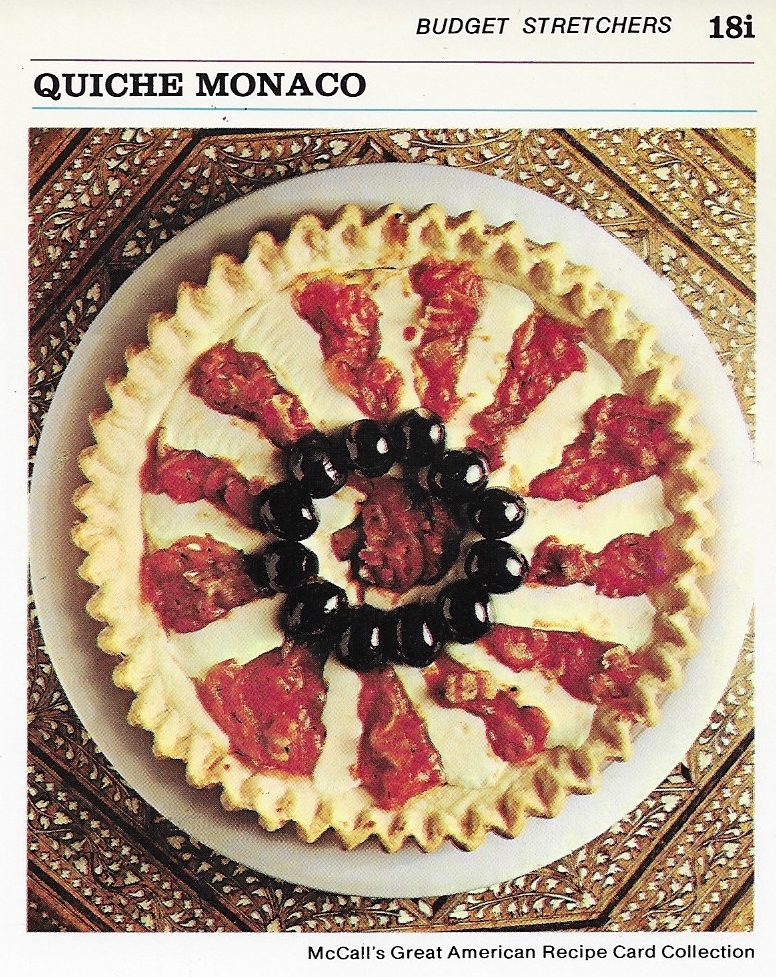
QUICHE 6 slices bacon, quartered 10-inch unbaked pie shell 1 cup grated natural Swiss cheese 4 eggs 1½ cups light cream ½ teaspoon salt ⅛ teaspoon nutmeg ⅛ teaspoon pepper ½ teaspoon dried oregano leaves
PIZZA SAUCE 3 medium white onions, sliced 1 can (8 oz) whole tomatoes, undrained ¼ teaspoon sugar ½ teaspoon dried thyme leaves ¼ lb mozzarella cheese 12 pitted black olives
Preheat oven to 375F.
Make Quiche: Sauté bacon until crips; drain on paper towels. Reserve 2 tablespoons bacon fat.
In bottom of pie shell, sprinkle two-thirds of bacon with grated cheese.
In medium bowl, beat eggs with cream, salt, nutmeg, pepper, and organ until smooth. Pour into pie shell. Bake 30 minutes, or until golden and sharp knife inserted near center comes out clean.
Meanwhile, make Sauce: In reserved bacon fat in medium skillet, sauté onion several minutes, until tender. Add tomatoes, sugar, and thyme. Simmer, stirring, 15 minutes, or until mixture is slightly thickened. Slice mozzarella into 3½-by-½-inch slices.
Garnish top of Quiche with mozzarella strips, spoke fashion, alternating with tomatoes mixture. Sprinkle with rest of bacon. Spoon remaining tomato mixture into center. Decorate with olives.
Bake 5 minutes longer to melt cheese slightly. Serve warm. Makes 8 servings.
8 ounces drained, canned salmon 2 medium eggs, separated ½ cup skim milk ¼ cup finely chopped celery 2 tablespoons dehydrated onion flakes 2 tablespoons finely chopped fresh parsley 1 teaspoon salt ⅛ teaspoon pepper ¼ teaspoon paprika 2 medium eggs, hard-cooked and sliced
Mash salmon. Beat egg yolks with milk. Add celery, onion flakes, parsley, salt, and pepper. Stir into salmon; mix well. Beat egg whites until stiff but no dry. Gently fold into salmon mixture. Spoon into a nonstick, 9x5x3-inch loaf pan. Sprinkle with paprika. Bake at 350°F (moderate oven) for 45 minutes, or until firm. Garnish with sliced eggs. Divide evenly. Makes 4 luncheon servings.
ingredients: 3-pound lamprey, or eel 1 bottle red wine, preferably Bordeaux 16 leeks 4 carrots 4 shallots 1 cup chopped ham ½ cup oil 1 Tablespoon flour salt, pepper 1 thyme sprig (or ½ teaspoon dried thyme) 1 bay leaf 12 croutons (fried bread cubes) 1 clove garlic (optional)
Instructions:
Bleed the lamprey by cutting two inches off its tail. Mix the blood with a cup of wine.
Scald the fish and scrape off the skin. Make an incision around the neck below the gills. Pull out the central nerve through this opening.
Cut the lamprey into 2-inch slices. Put them into a deep bowl, cover with wine, and set aside.
Peel and wash the leeks; use the white part only. Scrape, wash, and slice the carrots. Mince the shallots and chop the ham.
Heat the oil in a saucepan. Add the ham and vegetables, and when they start to brown, sprinkle with the four. Stir well and brown for a few minutes.
Pour in the remaining wine. Add salt, pepper, thyme, and bay leaf. Cover and let simmer for about 30 minutes.
Add the lamprey slices, and the wine in which they were marinated. Cook for 15 minutes.
Arrange the lamprey and leeks on a platter. Remove the pan from the heat and thicken. thesauce with the blood and wine mixture. Pour over the lamprey. Serve with the croutons, which may be rubbed with garlic.
The lamprey is a rare fish. In France it is available only in the Dordogne and Garonne areas, where they are plentiful from April to June. Eels may be used as a substitute.
4 (8-oz size) frozen rock lobster tails 2 lb raw shrimp, shelled and deveined 2 pkg (6-oz size) frozen* king crab, thawed and drained 10 tablespoons butter or margarine ⅔ cup flour 2 teaspoons salt ½ teaspoon paprika Dash white pepper 3 to 3½ cups half-and-half (half milk, half cream) 1¼ cups dry white wine
*Or use 2 cans (7½-oz size) king crabmeat, drained
In large kettle, bring 2½ quarts water to boiling. Add lobster tails; return to boiling. Reduce heat; simmer, covered, 8 minutes. With slotted utensil, lift out lobster tails, and set aside until cooled enough to handle.
Return water to boiling. Add shrimp; return to boiling. Reduce heat; simmer, covered, 5 minutes or until tender. Drain.
Drain crabmeat, removing any cartilage and leaving pieces as big as possible.
Remove meat from lobster shells; cut into bite-size pieces.
Melt butter in Dutch oven; remove from heat. Stir in flour, salt, paprika, and pepper until smooth. Gradually stir in 3 cups half-and-half, mixing until smooth.
Bring to boiling, stirring. Reduce heat; simmer 5 minutes.
Add wine, stirring until well combined. Add seafood; stir gently until combined. Cook over low heat until heated through. (Do not boil.) Add more half-and-half if sauce is too thick. Makes 12 servings.
For 4 people you need: 4-6 lamb or pig kidneys 5 slices bacon 1 large onion 2-4 tablespoons shortening or butter 1¼ cups stock seasoning 1 tablespoon cornstarch 3-4 tablespoons water rice or toast for serving
Skin and core the kidneys, cut into small pieces; cut bacon into small pieces; slice the onion.
Heat the shortening in the pan and fry kidneys, back, and onion together until the onion is soft and golden brown.
Pour in the stock, simmer for approximately 15 minutes, seasoning well.
Start cooking rice, if used.
Blend the cornstarch with the water and add to the kidney mixture, cook for several minutes, stirring all the time.
TO SERVE: Arrange in a border of cooked rice or on toast.
TO VARY: Use half stock and half tomato juice; add ½-1 cup sliced mushrooms. Blend the cornstarch with port instead of water.
TO STORE: The kidney and bacon mixture may be kept in a cool place and reheated thoroughly.
Long-time followers will remember my participation in this annual event. In past years I would subject my neighbour, affectionately known as Crazy Neighbour Dude, to being the official taste tester of the pies I’ve had to produce. Alas, this year I don’t have the luxury of him as a guinea pig. Earlier this year we moved from California to Oregon and Crazy Neighbour Dude moved to Vegas. We are now just statistics in the Grand Exodus from California, and I don’t know my new neighbours well enough to try to poison them. Maybe by next year.
Summer Pie
Summer pie comes from the 1971 Winnie-The-Pooh-inspired cookbook The Pooh Cook Book. I love me some Winnie-The-Pooh. If you don’t you’re a broken and sad person and I have no use for you.
Serves 6 8 digestive biscuits 1 level tablespoon castor sugar 1½ oz butter or margarine For the filling: 1 small tin sweetened condensed milk ¼ pint double cream 2 lemons ¼ lb black grapes
Find a rolling pin, a mixing basin, a saucepan, a tablespoon and a dessertspoon. Find also a 7″ shallow pie plate, a lemon squeezer and a grater.
Crush biscuits with a rolling pin to make fine crumbs and place the crumbs in a mixing basin. Add the sugar. Melt the butter in a saucepan over low heat, draw off the heat and using a fork stir in the biscuit crumb mixture. Mix well.
Spoon the mixture into the centre of the pie plate. Using the back of a tablespoon, press the mixture over the base and proud the sides of the dish to make a biscuit pie crust. Chill in the refrigerator for an hour or so until firm.
Place the condensed milk and cream into a mixing basin. Finely grate the rind of 1 lemon. Squeeze the juice from 2 lemons and strain it. Add to the mixture along with the lemon rind. Stir with a wooden spoon to mix and the mixture will go quite thick in the basin.
Pour the filling into the chilled biscuit pie crust and spread level. Wash, half and deseed the black grapes, arrange them in a ring around the edge of the pie to decorate.
Chill the pie for several hours for the filling to set firm. Then cut in wedges and serve.
Baker’s Notes:
Ingredient adjustments: Digestive Biscuits = Biscoff Cookies Double Cream = Heavy Whipping Cream Grapes = Raspberries
When you live in a small town in the Oregon countryside, fancy things like Digestive Biscuits from the UK are sparse, so I opted to do the crust using BIscoff cookies. Which come in handy little two-packs that they promote as “Airline size” – because that’s a marketing ploy that makes sense? But whatever, they taste good and do the trick for the crust.
The pie, however, was just a puddle of sugar that never actually set. I mean it pretended to. I left it in the fridge for 2 days before trying to cut it and there was no visible wiggle, but nope. Nothing doing. This could be because heavy whipping cream isn’t the same consistency as double cream. Also, I substituted raspberries for grapes because that’s just a weird pie topper as far as I’m concerned. Grapes are for wine.
My husband, the Poor Bastard, volunteered as tribute this year and wound up slurping up raspberries and cream with some crumble. While he didn’t complain about being experimented upon, he did tell me I was good to toss the whole thing out because our medical insurance won’t cover the heart surgery eating this whole pie would inevitably lead up to.
My apologies Battenburgbelle for any disappointment the execution of her pie may bring.
Hot water crust pastry 1½ pounds plain flour 2 level teaspoons salt ½ pound lard ½ pint water
Filling ¾ pound breast of veal ¾ pound gammon ¾ pound cooked tongue ½ Spanish onion, finely chopped Thyme Marjoram Chopped fresh tarragon Chopped fresh parsley Salt and freshly ground black pepper 3 hard-boiled eggs
Garnish Beaten egg Aspic jelly
Hot water crust pastry: Sift flour and salt into a large mixing bowl. Melt the lard and water in a saucepan, and bring to a boil. Remove from heat. Add to the dry ingredients and mix quickly to a soft, pliable dough. Line a rectangular pie mould with two-thirds of the dough, pressing it well down into the corners.
Filling: Cut the veal, gammon and cooked tongue into cubes, and mix with finely chopped Spanish onion and generous amounts of thyme, marjoram and chopped fresh tarragon and parsley. Season to taste with salt and freshly ground black pepper. Half-fill the mould with the meat and herb mixture; arrange hard-boiled eggs on top and then fill mould with the remaining meat and herb mixture.
Roll out remaining pastry and cover the top of the pie, pressing edges well together. Trim edges and decorate with “leaves” cut from pastry trimmings. Brush with beaten egg; make three small holes in the pastry lid for the steam to escape, and bake in a fairly hot oven (425° – M6) for ½ hour. Then reduce heat to 375° – M4 and cooked for a further 1¼ hours. (If top becomes too brown, cover with a sheet of aluminium foil.) Allow pie to become quite cold. Remove rectangular pie mould and pour liquid aspic jelly (cool) through the holes in the pastry with the aid of a paper funnel. Leave pie overnight before cutting.