13 oz. pork or chicken liver ½ leek ¾-inch piece of fresh ginger or ⅙ teaspoon ginger powder
(a) 2 tablespoons soy sauce 1 tablespoon sugar 1 tablespoon sherry ½ cup water ¼ teaspoon pepper a pinch of salt a pinch of monosodium glutamate
a sprig of parsley for garnish
Dip the liver into water for 15 minutes to drain off the blood. Cut the leek and slice the ginger. Bring water to a boil and add the leek, ginger and liver. Boil until the white foams come out. Drain the water and bring ingredients (a) to a boil in the same pan. Add the liver and simmer, covered, over a low heat until the liver is cooked. Then take off the lid and boil down the liquid. Let the liver cool and slice into 1 inch thick pieces.
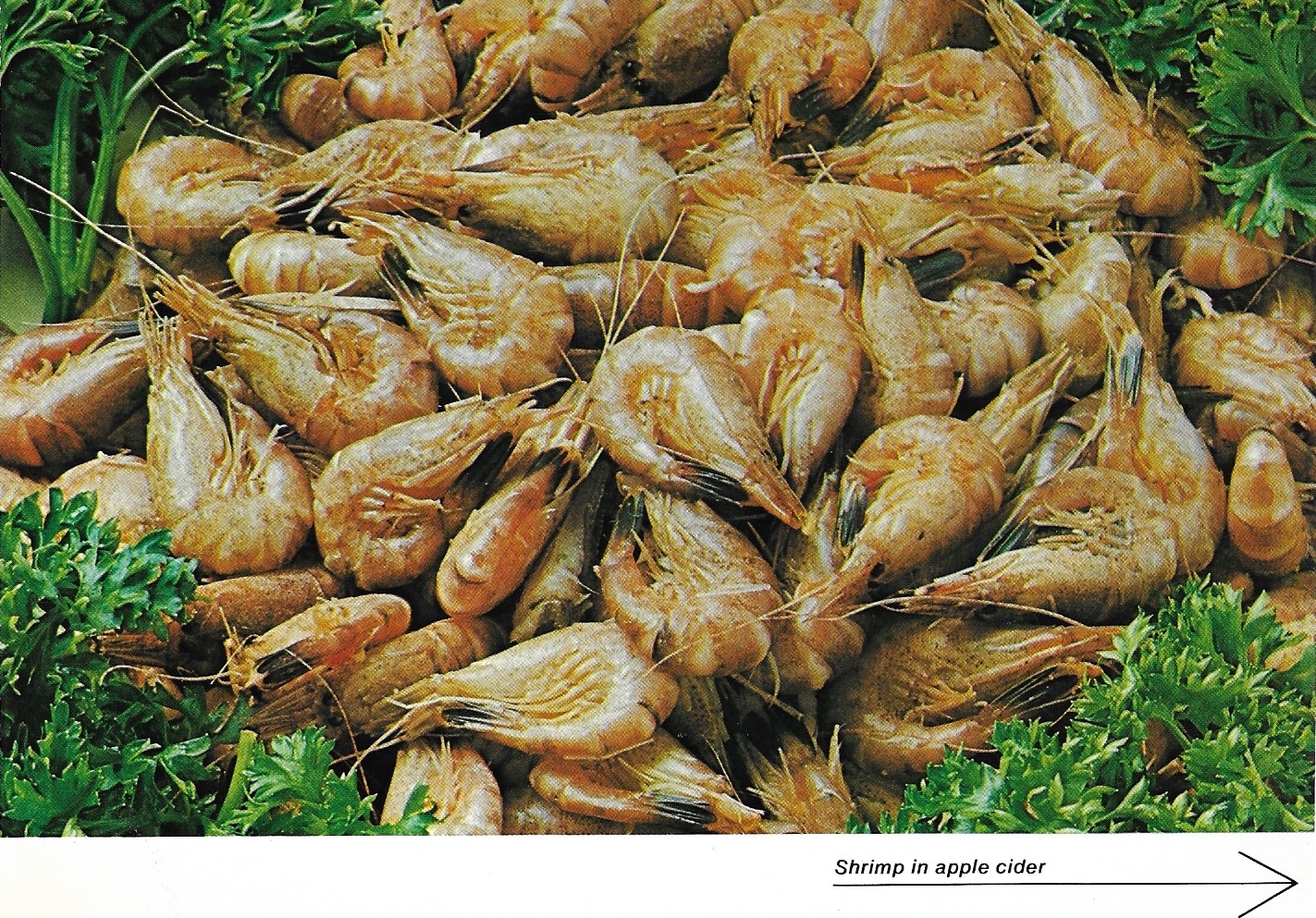
ingredients: 2 cups of hard cider ½ cup coarse salt 4 cups water 1 pound tiny raw shrimp
instructions: 1. Put the cider, salt and pepper in water. Bring to a slow boil and continue boiling for 10 minutes until the salt has dissolved completely.
2. Put the shrimp in the boiling liquid. Continue to boil gently for 5 minutes, shaking the saucepan from time to time. Drain.
3. Serve warm with fresh butter.
Hard cider is the Normandy drink, par excellence. It is used like wine in cooking, but not as frequently. It adds, however, its special taste to numerous recipes.
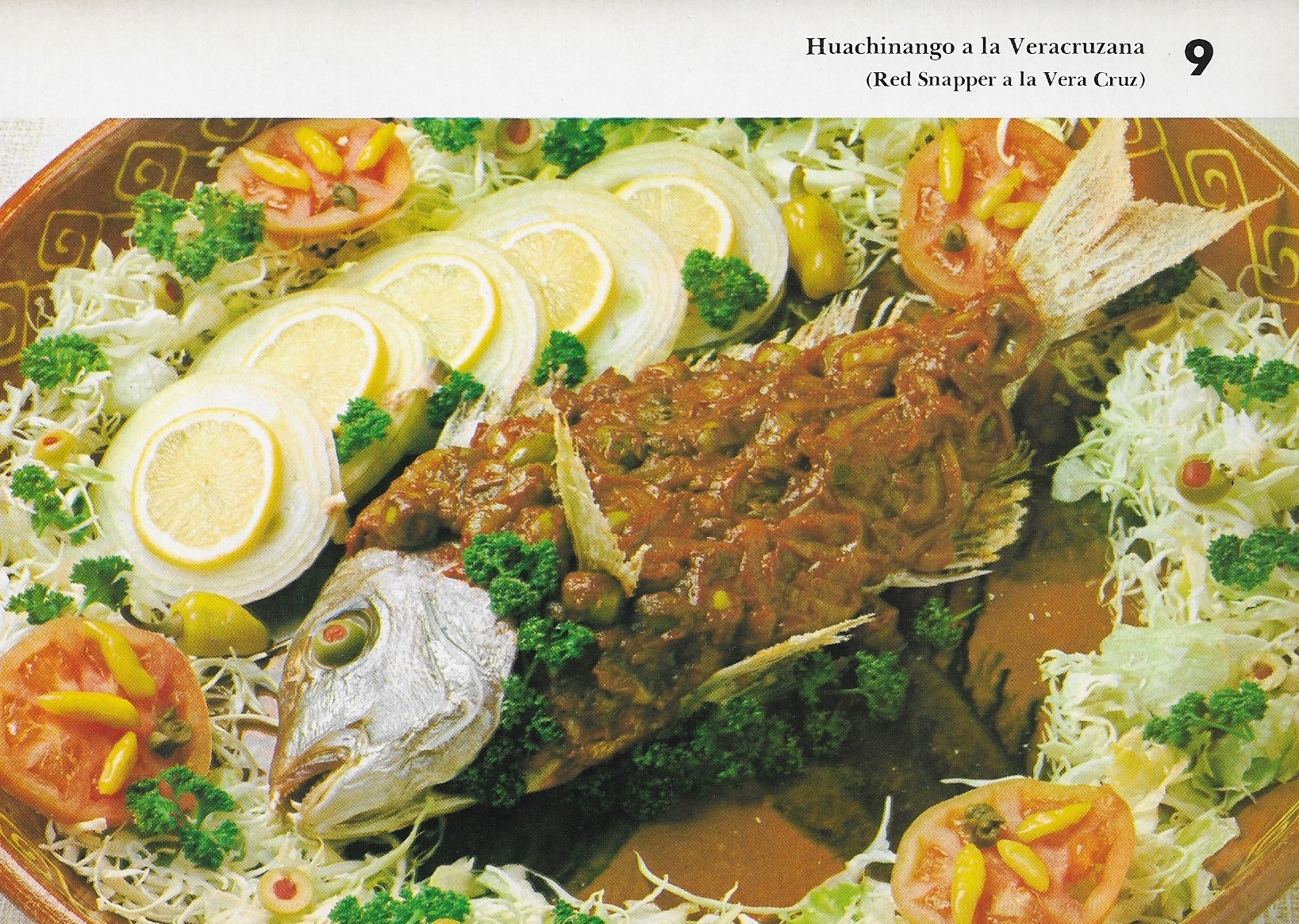
You will need 4 red snapper fillets 1 large onion, thinly sliced 2 cups tomato purée ¼ cup capers ½ cup green olives stuffed with pimento 2 yellow chiles in vinegar (optional) 3 tablespoons oil salt and pepper lemon and parsley as garnish
Sauté onion in hot oil until transparent. Add tomato purée, salt and pepper. Simmer 10 minutes. Add fish, capers, olives and chiles. Simmer over low heat 15 minutes or until fish is done and the sauce is thick. Garnish with lemon and parsley.
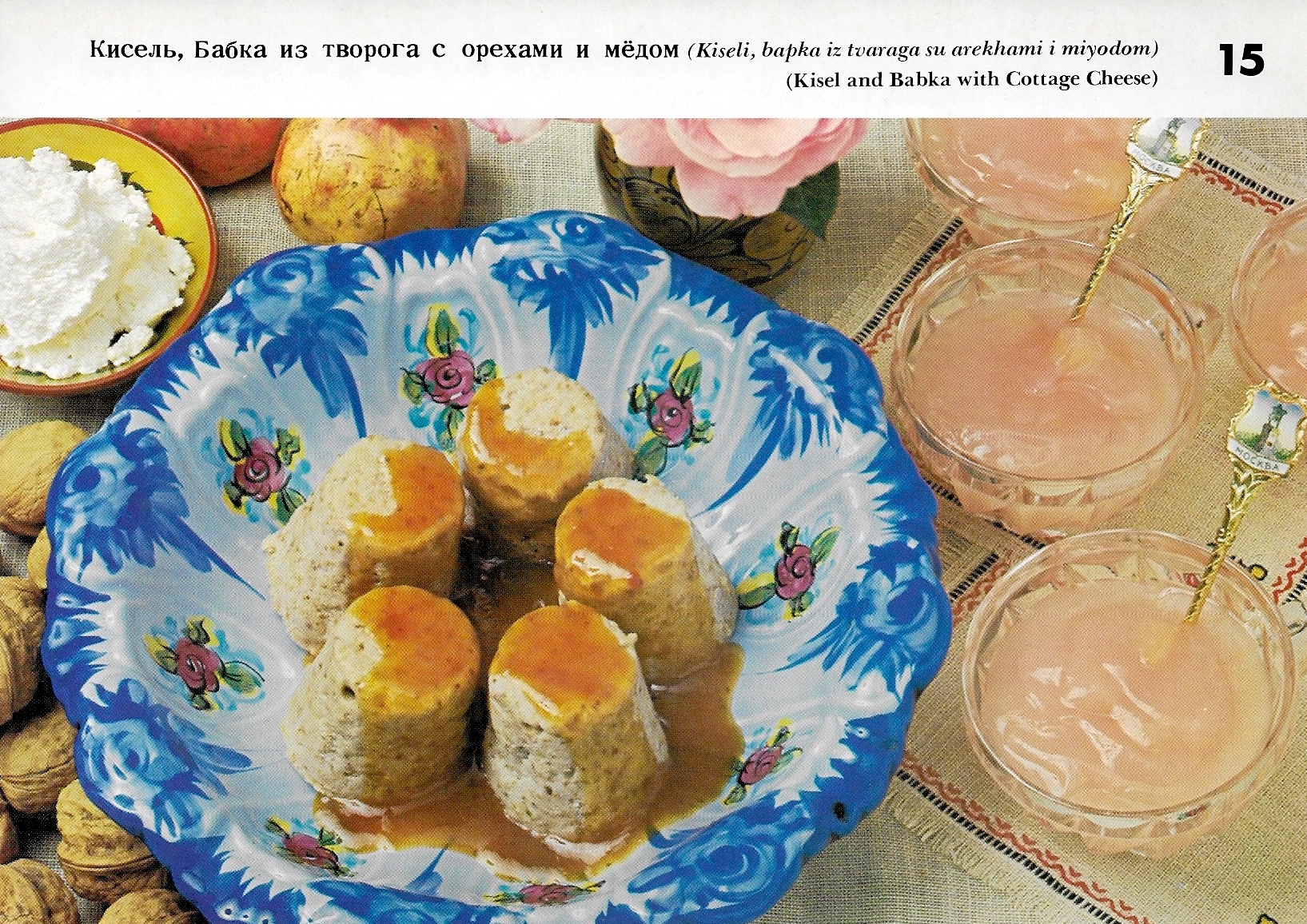
You will need 4 oz. canned pineapple 3 oz. canned pear ⅓ cup canned fruit juice ⅓ cup white wine ½ cup water 1 ½ oz. cornstarch 4 tablespoons sugar juice of ⅓ lemon 2 tablespoons grenadine
Dice 2 pineapple rings and set aside. Combine the remainder of the pear and fruit juice and purée in a blender.
Add the wine, water, cornstarch, sugar and grenadine to the puréed mixture; pour into a pot, mix well and heat until thickened. Finally add the lemon juice and diced pineapple. Let cool, and then chill in the refrigerator. Serve in a glass dish.
Babka
4 servings
You will need 6 oz. cottage cheese 4 teaspoons flour 1 small egg 2 tablespoons milk 1 ⅔ tablespoons honey 1 tablespoon sugar 1 ½ tablespoons melted butter 1 ½ tablespoons chopped walnuts little grated lemon rind 1 ½ tablespoons butter for plate
Fruit sauce: 3 oz. canned apricots ½ cup canned apricot syrup 2 teaspoons sugar 1 teaspoon cornstarch
Sieve the cottage cheese. Sift the flour; separate egg and beat the white until stiff.
Add the remaining ingredients and the egg yolk to above.
Add the egg white and grated lemon rind.
Grease 4 custard cups with butter. Pour the above mixture in and steam over low heat 25 minutes, leave the lid slightly ajar.
When cool, unmold. Pour the fruit sauce over.
Fruit sauce: combine the canned apricots and its juice. Pour into a pot, add sugar and cornstarch. Heat, stirring until thickened.
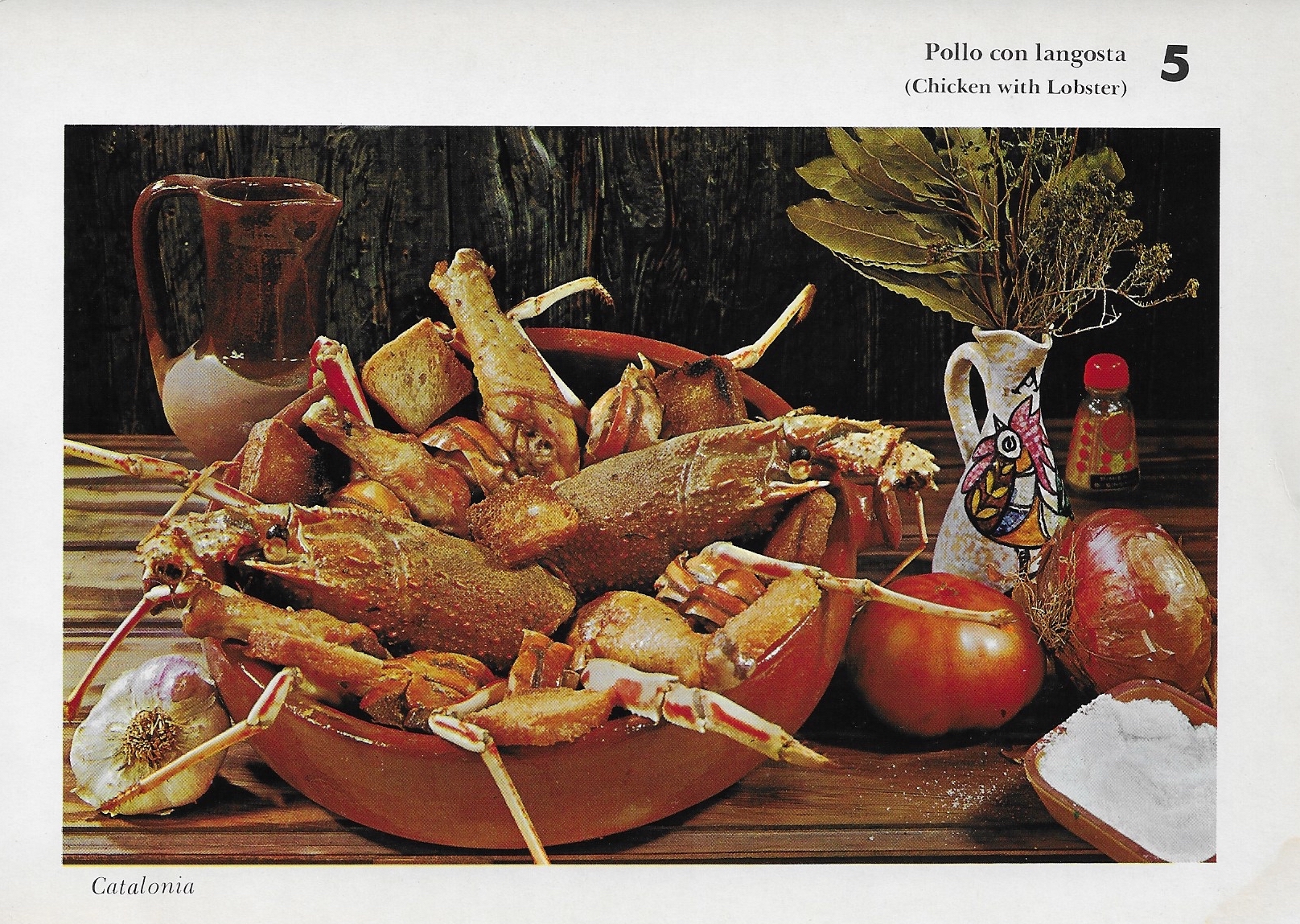
You will need 1 chicken weighing 2lb. powdered cinnamon ½ cup lard ½ cup oil 1 large onion, chopped 1 bunch of herbs, containing bay leaf, thyme, marjoram, a few leek tops, parsley and a piece dry orange peel; all well tied with a strong thread or twine. 3 or 4 medium ripe tomatoes, peeled and chopped 1 glass old wine 1 small glass dry spirits 1 teaspoon flour 1 live lobster, weighing 2lb. a few pistils dry saffron 1 large clove garlic, peeled 2 tablespoons toasted and peeled almonds and hazel-nuts 2 tablespoons chocolate 8 rather large, triangular-shaped slices of fried bread ground pepper parsley salt pepper
Cut the chicken into 8 pieces, sprinkle with salt, pepper and a little cinnamon. Brown, together with chicken liver, in equal parts of lard and oil in a shallow earthenware pot or casserole. When golden, add chopped onion and the bunch of herbs. Stir, and once the onion is tender, add the tomatoes. Stir, and once the onion is tender, add the tomatoes. Fry until the tomatoes lose wateriness, then add the wine and spirits.
Cover the casserole until the wine is reduced by half. Sprinkle with flour, simmer a little then pour on stock or hot water until the pieces of chicken are well covered.
Continue cooking slowly. Cut the lobster, while alive, into 8 pieces, keeping its liver and blood aside. Fry lightly in hot oil. When the chicken is half-cooked, add the lobster in the casserole.
In a mortar, pound the saffron, garlic, almonds and hazel-nuts, the fried chicken liver, the lobster’s liver. When the mixture converted into a smooth paste, add the melted or powdered chocolate. Dilute the paste with the lobster’s blood and the chicken sauce. Add to the casserole in which the chicken and the lobster are cooking.
Salt and pepper to taste. There should not be too much sauce, and once the dish is ready, remove the herbs and serve in the casserole, with the freshly-fried bread all around and a little minced parsley on top.
For special occasions, put the piece of chicken and lobster on a large, heated metal bowl. The pieces of lobster can even be taken out of their shell, keeping the head in the centre of the dish. Strain the sauce and pour over everything. Place the dishes of fried bread around the sides, alternating with lobster claws.
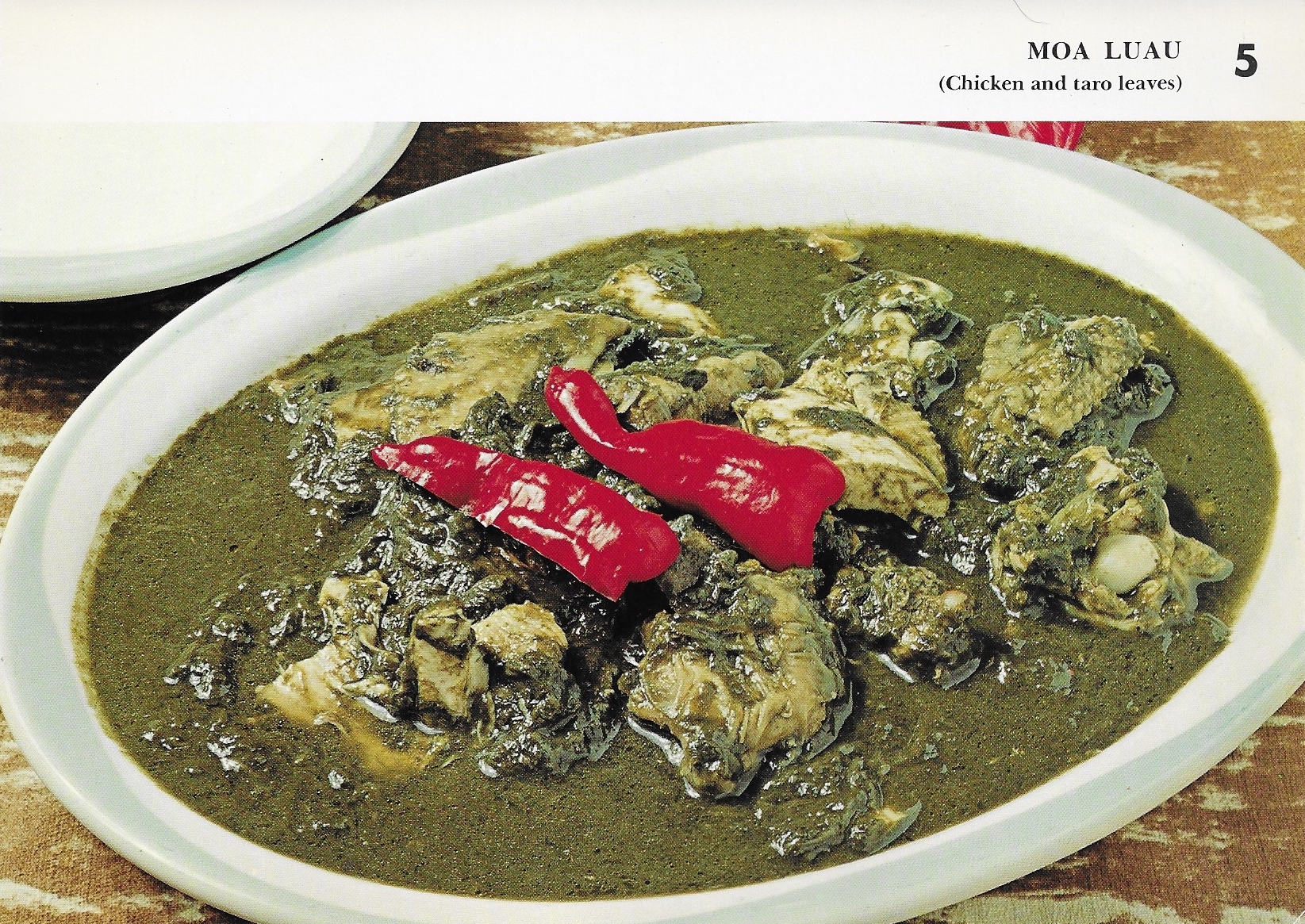
You will need 1 ¼ pounds chicken 1 ½ tablespoons butter 1 ½ teaspoons salt 2 tablespoons fat 2 ½ cups of water 3 bunches luau (60 taro leaves)
Clean and cut the chicken in 1-inch cubes. Heat the fat and fry the chicken until it is brown. Add 1 teaspoon salt and 1 cup of water and simmer the chicken until it is tender.
Wash the taro leaves. Remove the stem and tough part of the rib. Place the luau, butter 1½ cups of water and remaining salt in a sauce pan. Partially cover and simmer them for 1 hour or until there is no “sting” noticeable to the taste.
Press the excess liquid from the luau, drain the chicken and combine it with the luau. Allow the mixture to come to the boiling point and serve immediately. Fresh or canned spinach may be used in place of the luau.
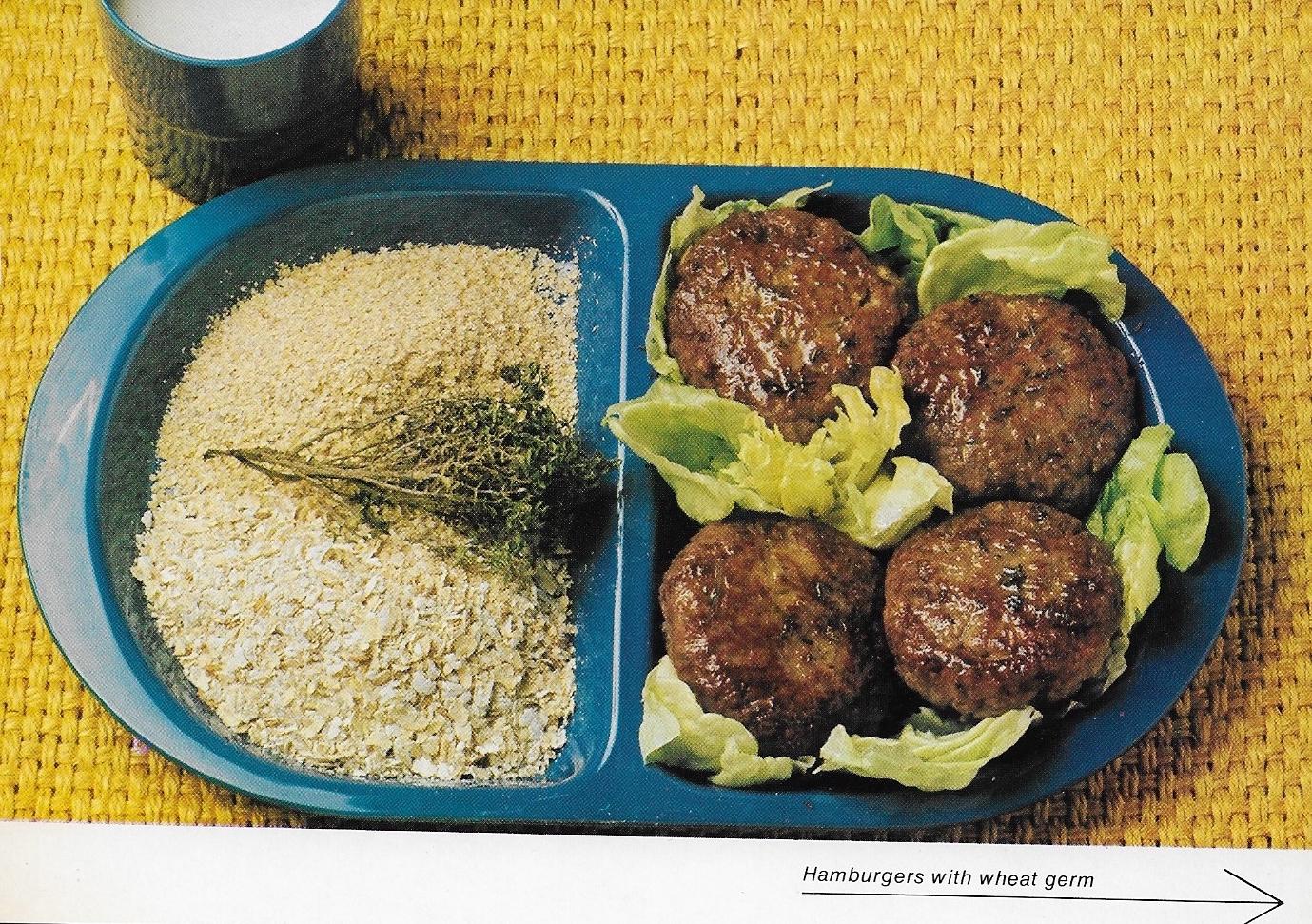
Soak the wheat germ in the milk for 15 to 20 minutes. Beat the egg in a bowl.
Mix the meat thoroughly with the oatmeal, egg, and wheat germ. Salt and pepper.
Shape into 8 meatballs or patties, and dust them with flour. Sprinkle them with thyme.
Fry them with the oil for 8 minutes on each side.
Do not keep the ground meat more than 3 hours, even in the refrigerator; an infant can then eat it safely. Toasted wheat germ is available in health-food stores and most supermarkets.
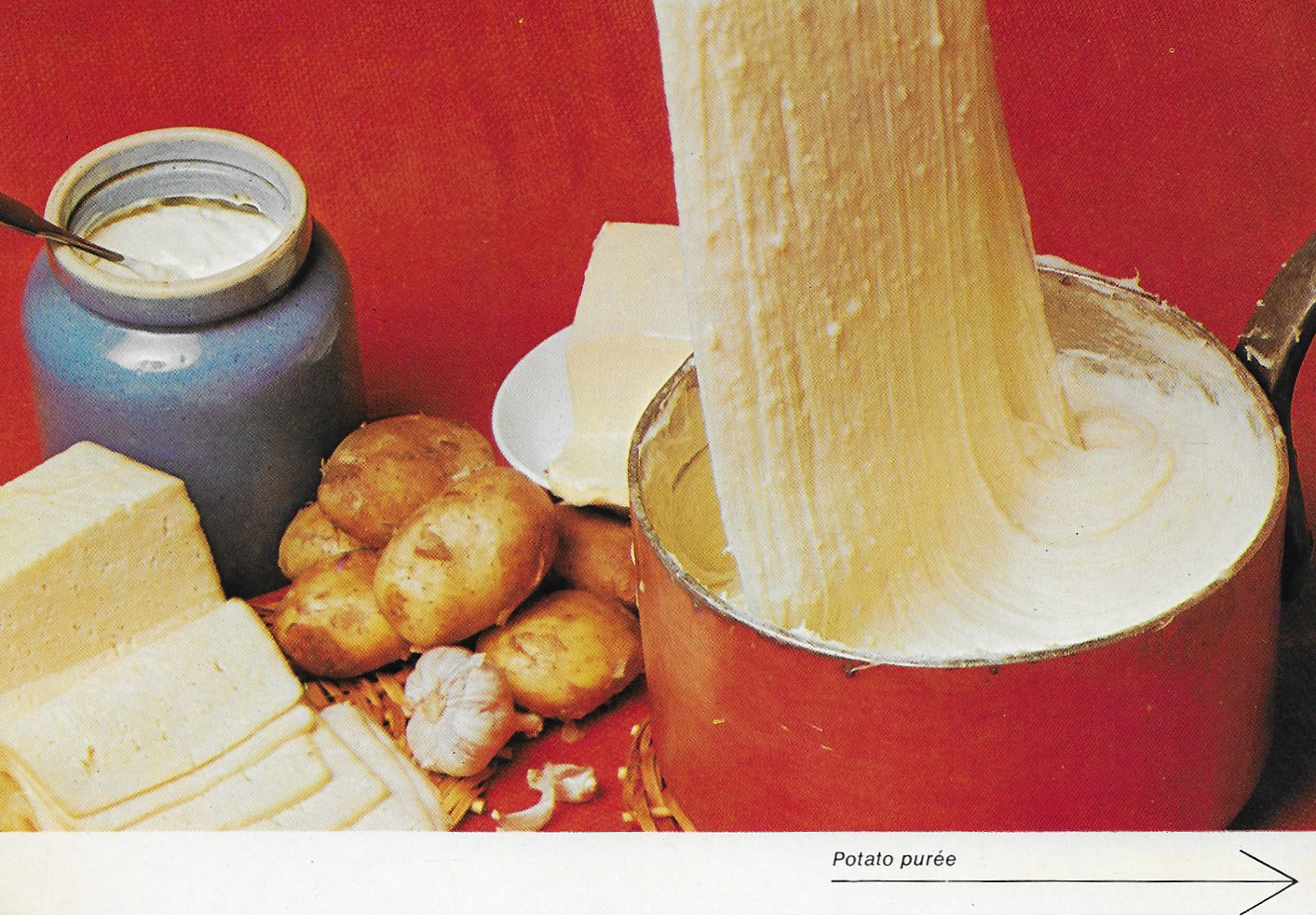
ingredients: 1 clove garlic 12 ounces unripened soft cheese (traditionally cantal) 1 pound potatoes 2 ½ Tablespoons butter 1 ¼ cups heavy cream pepper, salt
instructions:
Crush the garlic. Slice the cheese very thin, or shred it if you wish. But do not grate it.
Wash the potatoes carefully and boil them unpeeled in salt water for 30 minutes. Then peel and mash them immediately. Stir the purée over a low heat to dry it somewhat.
Mix in the butter, cream, garlic, salt and pepper.
Add the cheese continue to stir the purée. You will gradually obtain a homogenous threading mixture.
Serve immediately, since this purée cannot wait.
This distinctive purée will particularly enhance a roast beef dinner.
ingredients: 8 pitted prunes 1 teaspoon fresh yeast 1 cup milk ½ cup beet leaves 8 sprigs parsley 1 sprig (or ½ teaspoon dried) tarragon 4 sprigs (or 1 teaspoon dried) chervil 1 cup leftover meat ½ pound bacon 2 onions ⅓ cup flour 4 eggs salt, pepper 2 Tablespoons peanut oil, walnut oil, or safflower oil
instructions:
Soak the prunes in water or wine. Dissolve yeast in a tablespoon of warm milk. Was the beet leaves and the herbs.
Grind the meat, bacon, onions, beet leaves, and herbs.
Blend in the flour, eggs, salt, and pepper. Add the milk so as to obtain a thick, creamy liquid; add the yeast and prunes.
Heat the oil in a flameproof dish or Dutch oven over a low flame. When the oil is very hot, pour in the batter. Transfer the dish to a moderate oven and bake it for 30 minutes. Serve hot or cold.
In Auvergne, this meat cake is reheated by cutting it into slices and frying them in walnut oil, butter, or bacon fat.
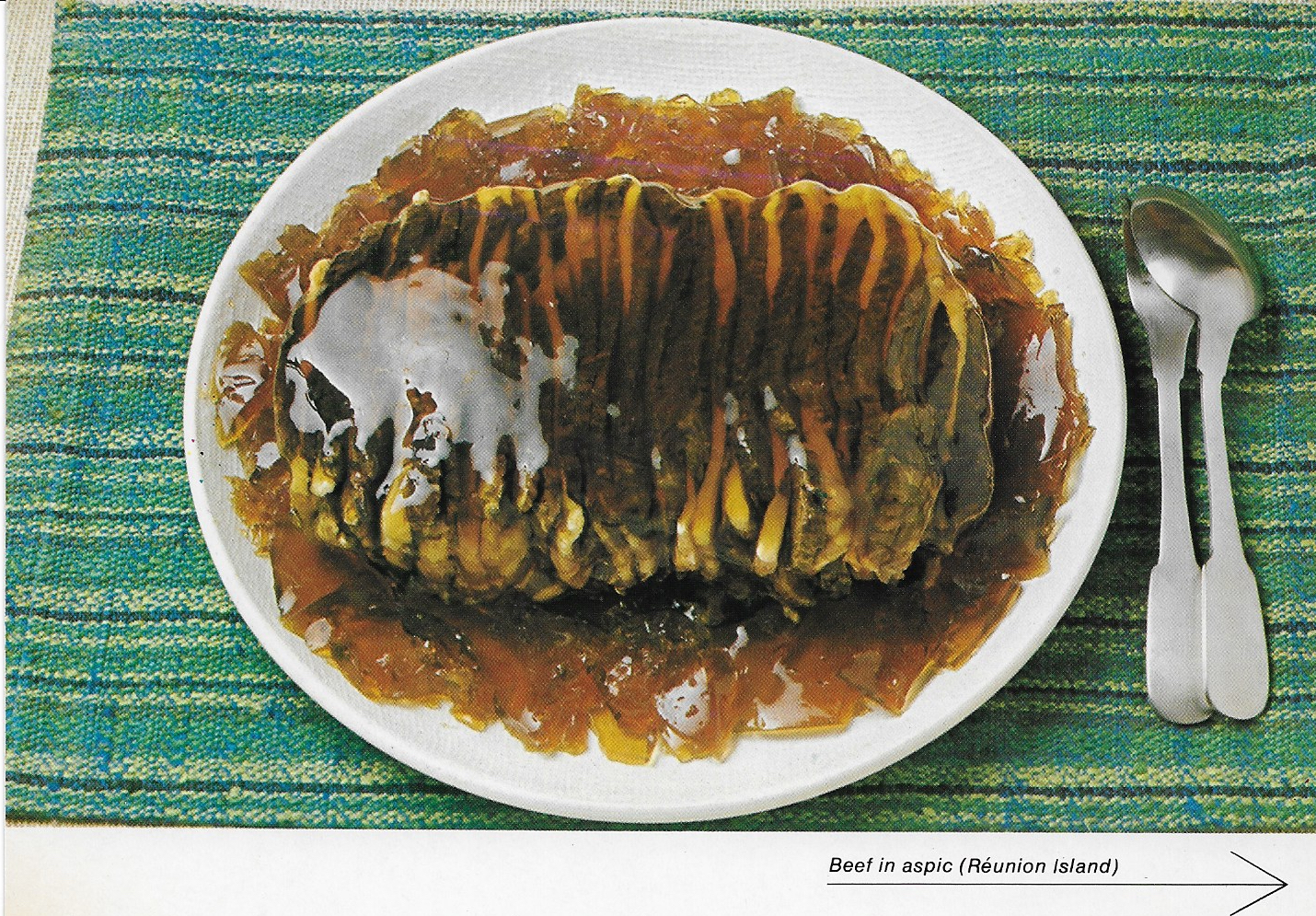
ingredients: 2 pounds thinly sliced lean beef (from the rump or round) ¼ pound lean bacon strips 2 onions 2 shallots 2 cloves garlic 1 handful parsley 1 sprig thyme, or ½ teaspoon dried 1 bay leaf salt, pepper nutmeg 4 ounces fresh bacon fat 1 Tablespoon flour 2 cups dry white wine 1 calf’s foot 1 teaspoon agar-agar or Japanese Moss 1 cup beef bouillon
instructions:
Flatten the beef slices and season with salt and pepper.
Chop one onion, the shallots, garlic and parsley. Sprinkle in the finely chopped thyme and bay leaf. Add salt, pepper, and grated nutmeg to taste. Mix thoroughly.
On each slice of beef place a slice of bacon and spread some of the herb mixture on it. Pile the seasoned slices into a “tower” and press as flat as possible. End with a slice of beef, then tie the entire pile together with string so it will not fall apart while cooking.
Mince the bacon fat and the remaining onion, sprinkle with flour, and add any remaining herb mixture there may be. Brown lightly in a Dutch oven. Add the wine, the calf’s foot, and the securely-tied beef slices. Cover and cook over low heat for 3 hours.
When done, remove the meat from the pot. Dissolve the agar-agar in the bouillon and add it to the liquid in the Dutch oven.
Place the meat into a mold and strain the liquid over it. Refrigerate. The sauce will jell. Unmold when ready to serve, and garnish with sprigs of parsley.
This dish is ideal for a meal served outdoors. As agar-agar and Japanese Moss are not readily obtainable, plan unflavored gelatine may be substituted, using a little less liquid than the instructions call for, in order to obtain a stiffer gelatine.



 Vintage Recipe Cards