Tag Archives: Golden Cooking Cards Book

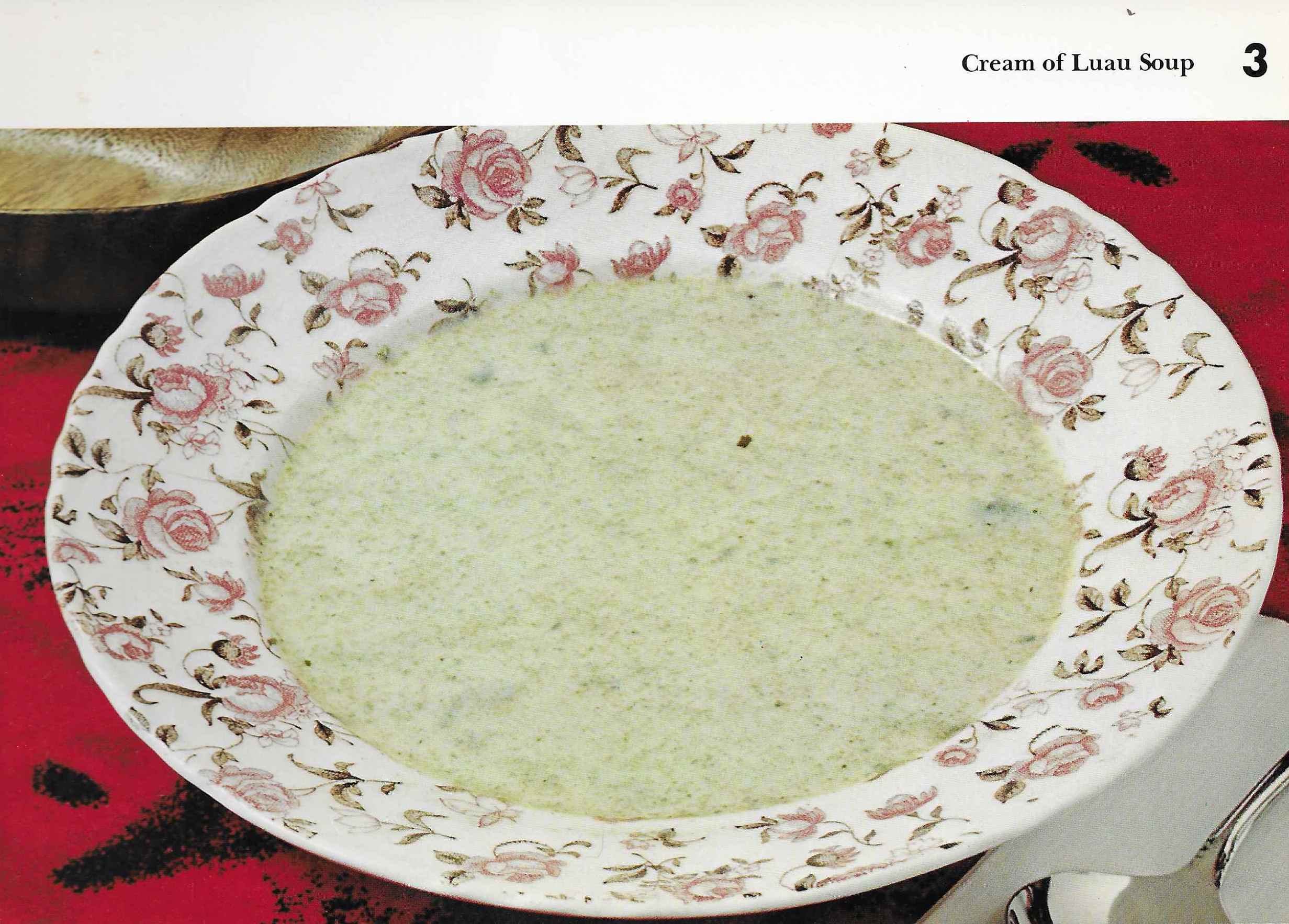
Cream of Luau Soup

6 servings

You will need
1 ½ cups cooked luau pulp (2 bunches of luau)
4 ½ cups milk
2 tablespoons butter
2 ½ tablespoons flour
1 ¾ teaspoons salt
pepper if desired

See recipe number 5 on how to prepare luau for cooking.

Press the luau through a sieve. Measure it so that there will be 1 ½ cups of cooked pulp. Melt the butter, add the flour, and mix until a smooth paste is formed.

Stir in the milk gradually and cook until the mixture thickens. Add the luau and seasonings and serve hot.

Notes and instructions from recipe number 5:
2 bunches of luau is 40 taro leaves.
Wash the taro leaves. Remove the stem and tough part of the rib. Place the luau 1 ½ tablespoons butter, 1 ½ cups water and ½ teaspoon salt in a sauce pan. Partially cover and simmer them for 1 hour or until there is no “sting” noticeable to the taste.


© Shufunotomo Co., Ltd., Japan 1972
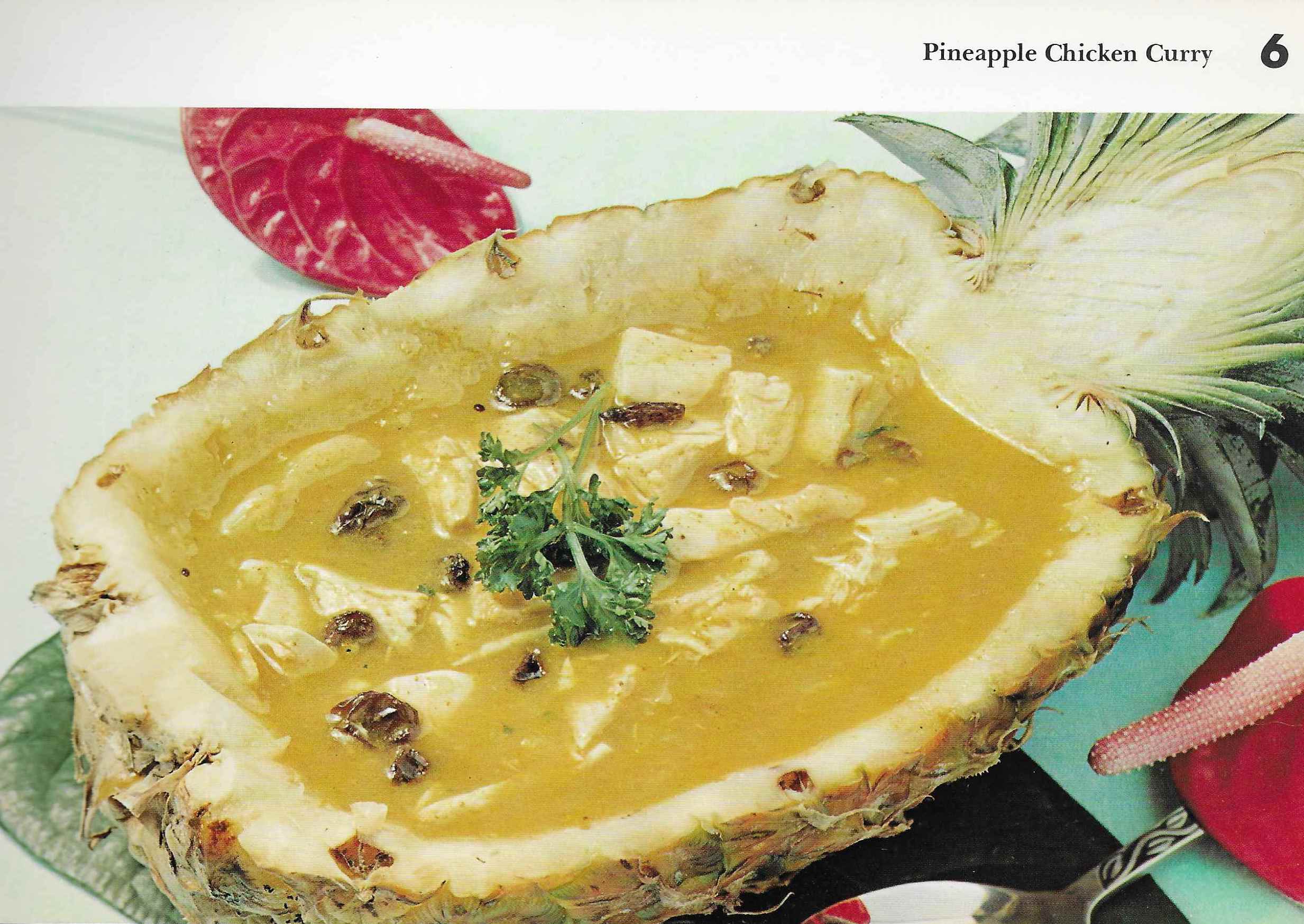
Pineapple Chicken Curry

6 to 8 servings

You will need

4 pounds chicken
4 medium sized onions
2 to 3 stalks celery
5 tablespoons olive or cooking oil
5 tablespoons flour
2 tablespoons curry powder (more if you like it hotter)
½ teaspoon salt
1 quart chicken stock
¼ cup seedless raisins
1 tablespoon lemon juice
1 cup crushed pineapple, well drained
1 ½ cup heavy cream

Cut up chicken for fricassee and boil until tender with a small onion, sliced, and two or three stalks of celery. Strain the stock and add chicken soup if there is not a quart of the stock.

Remove chicken meat from the bones, discard skin and cut meat into bite-sized pieces. Fry onions in oil, mix curry powder and salt with flour and stir into oil. Simmer for a few minutes and add chicken stock.

Put into double boiler and add raisins, pineapple and lemon juice and cook for half hour. Add heavy cream, chicken and more salt if needed, and cook about 15 minutes over a low fire.

To add attractiveness to the dish serve in hollowed out pineapple shells with some leaves left on.


Shufunotomo Co., Ltd., Japan 1972

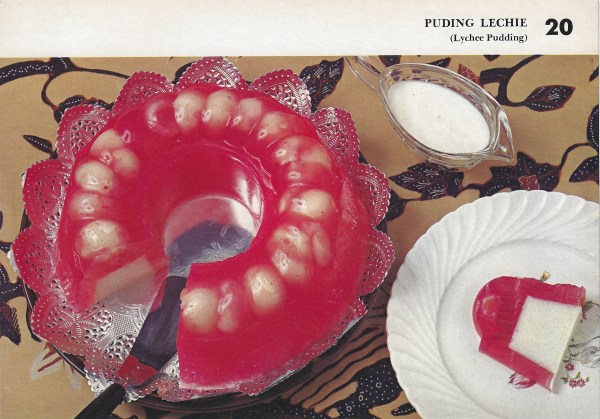
Puding Lechie (Lychee Pudding)

10 servings

You will need
(A)
2 agar-agars
1 cup sugar
2 1/2 cups water from canned lychee
little food coloring (red)
3 cups water
lychee
vanilla extract

Prepare the (B) ingredients
(B)
4 1/2 cups water
1 1/2 agar-agars
4 egg yolks
15 tablespoons sweet milk
1 1/4 cups sugar
vanilla extract

Mix the aga-agar [sic], sugar, water of lychee and 3 cups water very well. Bring to a boil. Add food coloring and lychee. Moisten a cake mold, then pour the mixture into it. Let it cool.

Mix the water, sugar and agar-agar well, and add the egg yolks. Bring to a boil. Add the milk a little at a time. Pour (B) into a mold and cool.

Usually this pudding is eaten with ice and orange or strawberry syrup.


Shufunotomo Co., Ltd., Tokyo, 1973

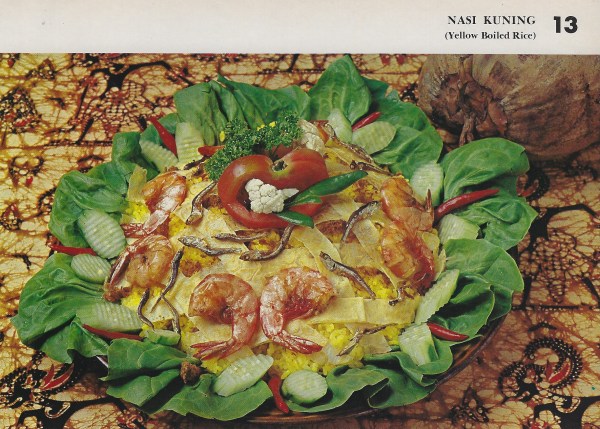
Nasi Kuning (Yellow Boiled Rice)


4 servings

You will need
2 lbs. 3 oz. rice
8 oz. coconut (desiccated)
5/12 cups water
OR fresh thin coconut milk
1/2 teaspoon turmeric
1/2 teaspoon salt
1/4 teaspoon MSG
2 dried Salam leaves
1 dried Sereh leaf
2 dried Jeruk leaves

Garnish:
8 lettuce leaves
4 sheets omelet
1 cucumber, sliced
8 fresh chili pepper
8 shrimps, cooked
little IKAN TERI (fried small fish)
1 tomato basquette
1 bunch of broccoli
little sliced pimento
parsley
crisp-fried onion

NASI KUNING is usually served on the occasion o celebrating, birthdays, graduations, etc.

This dish is prepared exactly the same as ordinary rice, (use coconut milk instead of water), mixed well with turmeric, salt, MSG, Salam, Sereh, and Jeruk. If you used a rice-cooker it will take about 15 minutes longer than usual.

You can use almost anything to decorate the NASI KUNING. In Indonesia the following are often used:
Garnishes:
Thin Omelet: Beat 4 eggs lightly. Season with a little salt and MSG to taste. Brush the fry pan with oil and heat pan, pour in enough egg mixture for omelet. Fry over low heat for 2 minutes. Repeat. Cut into 1/2-inch width.

Shrimps: See recipe 3 of UDANG RICA-RICA.

IKAN TERI: Sun-dried small fishes. Deep-fry and drain.

Crisp-fried Onion: Slice onions and deep crisp-fry. Stir continuously until well browned. Drain.


©Shufunotomo Co., Ltd., Tokyo 1973